

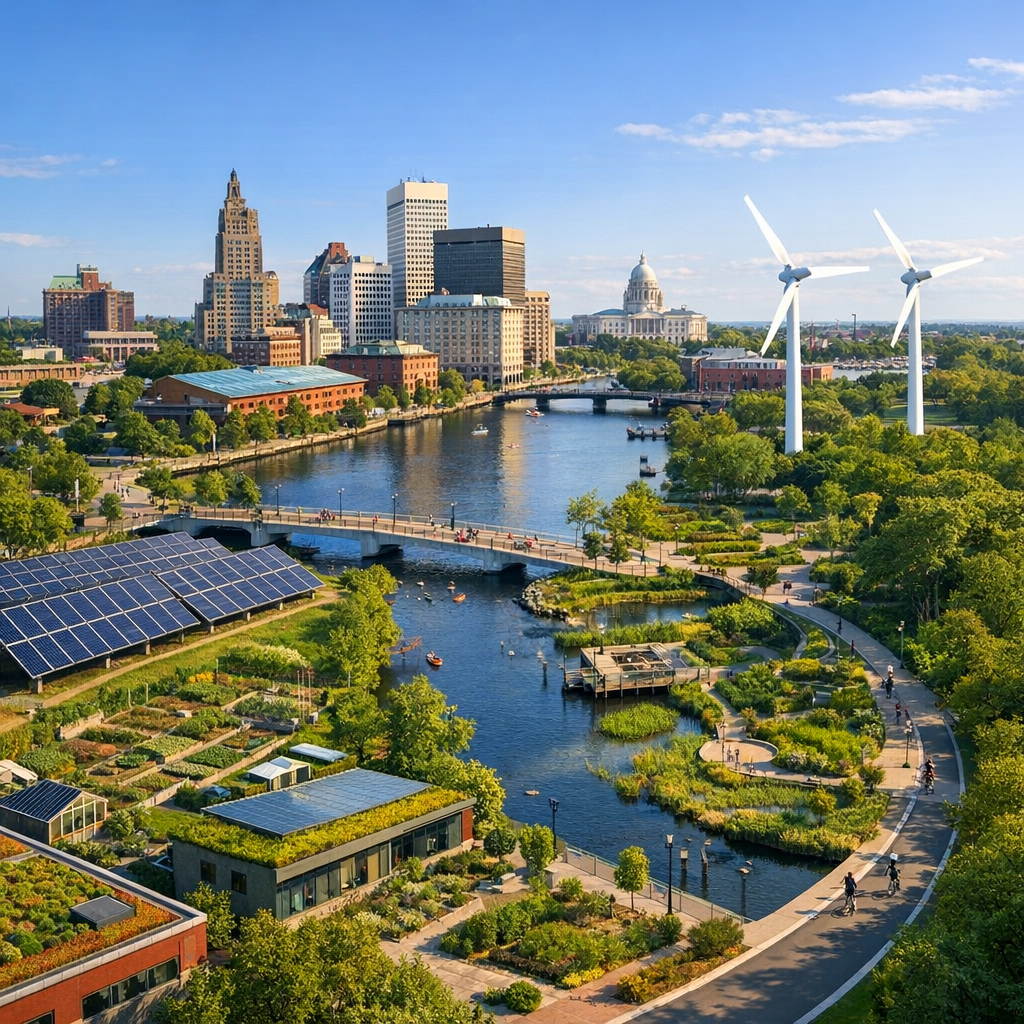
Providence, Rhode Island, is actively addressing the challenges posed by climate change through a series of strategic initiatives aimed at enhancing the city’s environmental resilience and sustainability.
Climate Change Impacts in Providence
The city faces several climate-related challenges, including increased air and water temperatures, more extreme weather events, and rising sea levels. These changes threaten public health, infrastructure, and the local economy. Notably, sea levels in Providence have risen by over 10 inches since record-keeping began in 1938, underscoring the urgency of proactive measures.
City-Led Environmental Initiatives
In response, Providence has launched several initiatives:
- Climate Ready PVD: This program focuses on integrating renewable energy into the city’s electricity supply, investing in green infrastructure to improve stormwater management, and repairing critical hurricane barriers to protect against natural disasters.
- Green Revolving Fund: Proposed by Mayor Brett Smiley, this $3 million fund aims to make all municipal buildings carbon neutral by 2040. The fund will finance energy efficiency improvements, with savings reinvested into further projects.
- Renewable Energy Adoption: Providence Water has achieved 100% renewable energy usage, primarily through a 4.99-megawatt solar array. This project not only reduces the city’s carbon footprint but also sets a precedent for sustainable practices.
Community and Collaborative Efforts
Beyond city-led initiatives, community organizations play a vital role:
- Breathe Providence: This community-focused air monitoring network aims to characterize the city’s air quality on a hyperlocal level, addressing environmental inequalities and protecting vulnerable populations.
- Stormwater Innovation Center: A collaborative effort dedicated to improving water quality and stormwater management across Rhode Island through research, education, and practical solutions.
Looking Ahead
Providence’s commitment to environmental resilience is evident in its comprehensive approach, combining policy initiatives, community engagement, and infrastructure improvements. These efforts not only address current environmental challenges but also lay the groundwork for a sustainable and resilient future for the city and its residents.