

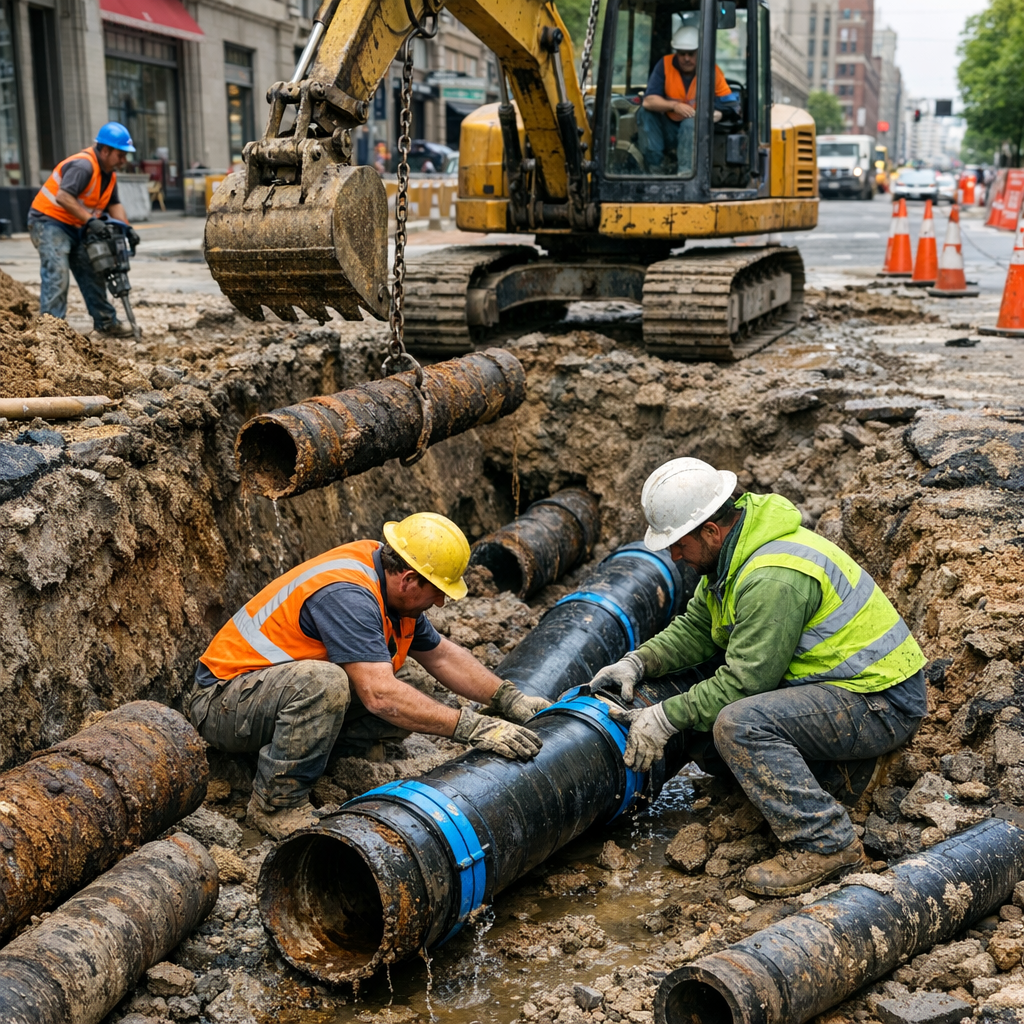
Providence is in the midst of a major effort to upgrade its water infrastructure. From replacing lead service lines, to revamping stormwater systems, the city’s leaders are pushing forward with long-term projects aimed at making tap water safer and streets more resilient against flooding.
Lead Service Lines: Moving Toward Full Replacement
The city is using significant federal funding—like grants under the Bipartisan Infrastructure Law—to replace lead pipes throughout both public infrastructure and private property boundaries. The goal is to eliminate the lead exposure risk that still affects many households, especially those with older connection pipes.
Health Impacts & Progress
While elevated blood-lead levels in local children remain higher than desired, data show a decline over recent years. Still, a sizable portion of schools and neighborhoods are near or above states of concern. Full replacement—not just partial fixes—is increasingly viewed as the only long-term solution.
Stormwater & Sewer Upgrades: Resilience Against Rainfall
Providence’s combined sewer and stormwater systems are under stress from more frequent heavy rainstorms. Small downpours can cause flooded streets, basement backups, sinkholes or polluted runoff into rivers. To counter this, new green infrastructure initiatives—such as rain gardens and permeable surfaces—are being implemented in vulnerable neighborhoods.
Community Mapping & City Projects
The city received grant funding to help residents map flood-prone areas, focusing first on districts like Woonasquatucket River and West River. Public Works has allocated millions to repair and clean out broken or blocked pipes, part of a larger assessment of what it takes to fix this aging, overburdened system.
What You Should Know & How You Can Help
- If you received notice that your service line might be made of lead—or you suspect it—contact Providence Water to learn about your options for free or subsidized replacement.
- Watch for city announcements about water quality reports, upcoming construction, and community meetings to stay informed and provide your input.
- Report flooding or drainage issues in your neighborhood—especially after storms. The City’s PVD311 system lets you track these reports and see city response.
- Support green infrastructure in your area: if you have space, rain gardens, tree plantings, and permeable driveways can all help reduce stormwater impact.
Modernizing Providence’s water systems is a long-term mission—but one that affects every home, school and street in the city. With more residents informed and engaged, the journey toward safer water and stronger neighborhoods becomes a shared effort.